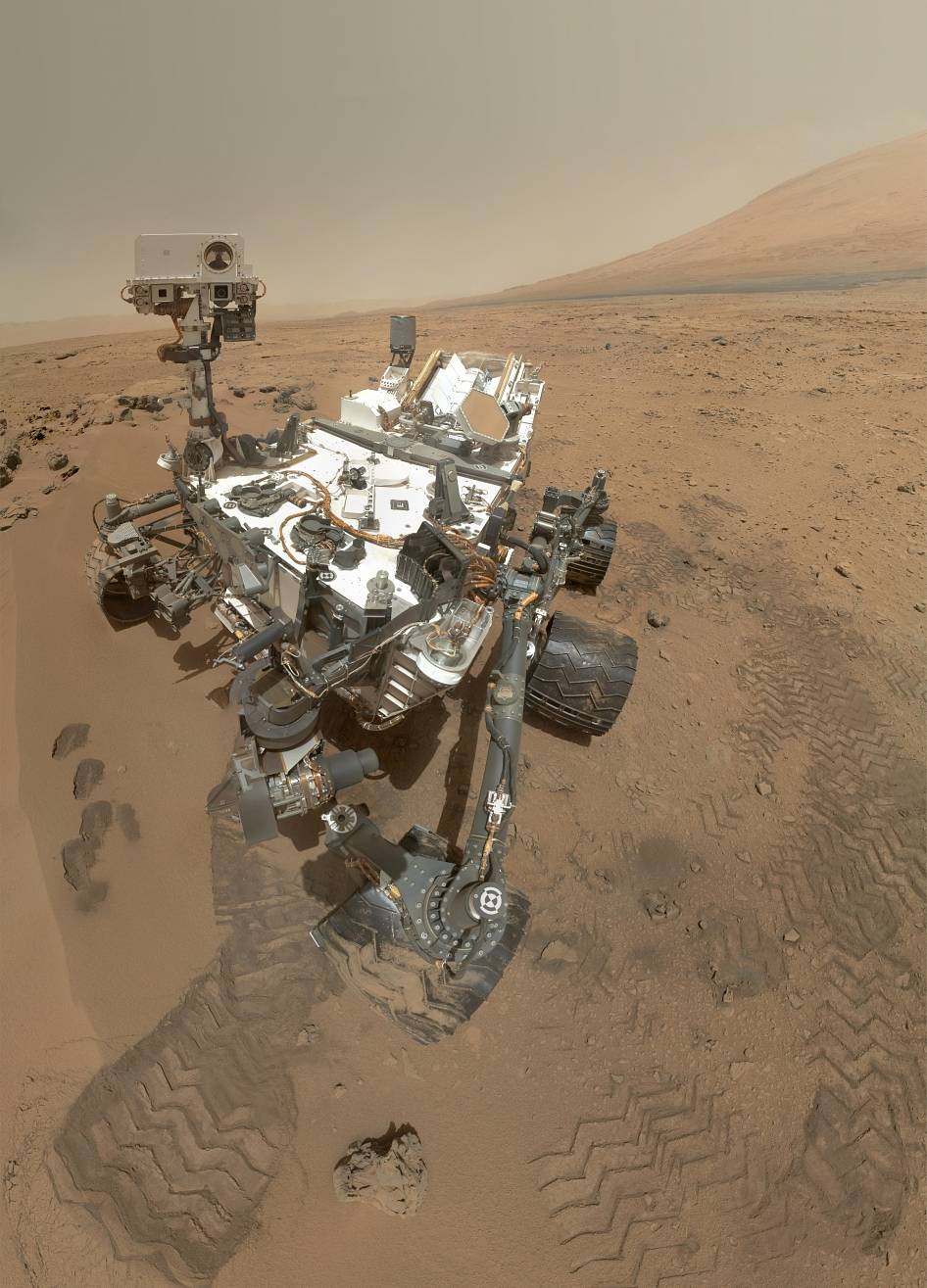
When the Curiosity rover landed on Mars on August 6, 2012, it delivered a ground-breaking instrument to the planet’s surface. The Radiation Assessment Device (RAD), developed by the Southwest Research Institute (SWRI) in Boulder, Colorado, is designed to collect neutron and charged particle spectral data over a range of biologically-interesting energies. This is the first time such an instrument has been carried to the surface of Mars, which should allow for understanding of the modification of space radiation by the Mars atmosphere and albedo radiation from cosmic ray interactions with the Mars surface. Prior to the landing, the RAD collected important data on galactic cosmic rays (GCR) and measured several solar particle events (SPE) during most of the 7-month Earth-Mars cruise phase. Initial readings after landing suggest it will have optimal responses.