As part of a natural cycle, ice shelves periodically calve icebergs. In March 2000, Antarctica’s Ross Ice Shelf released a mammoth berg nearly the size of Connecticut. Named B-15, it was one of the largest icebergs ever observed. B-15 broke into smaller pieces, but it mostly remained trapped in cold climate conditions as it lasted more than a decade.
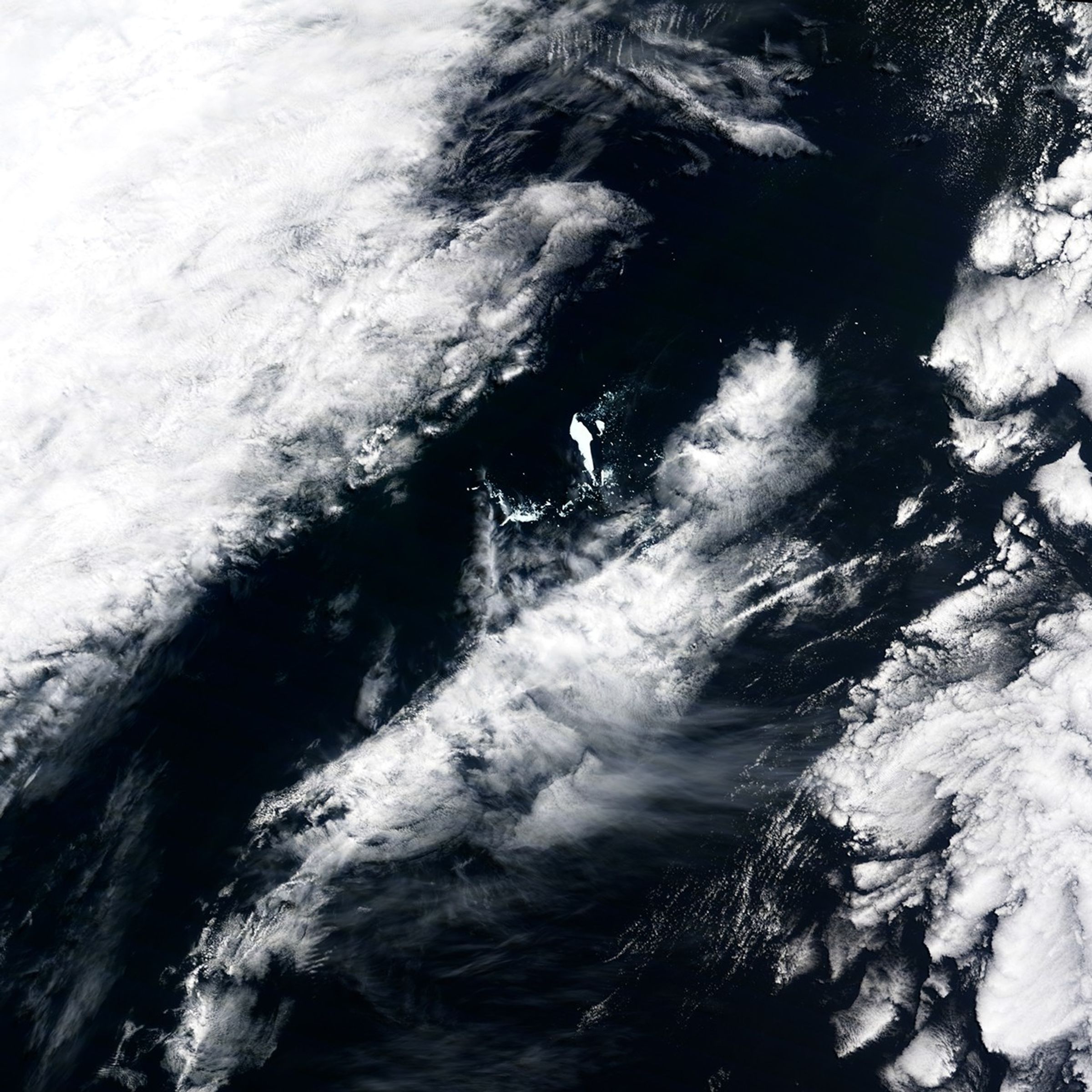
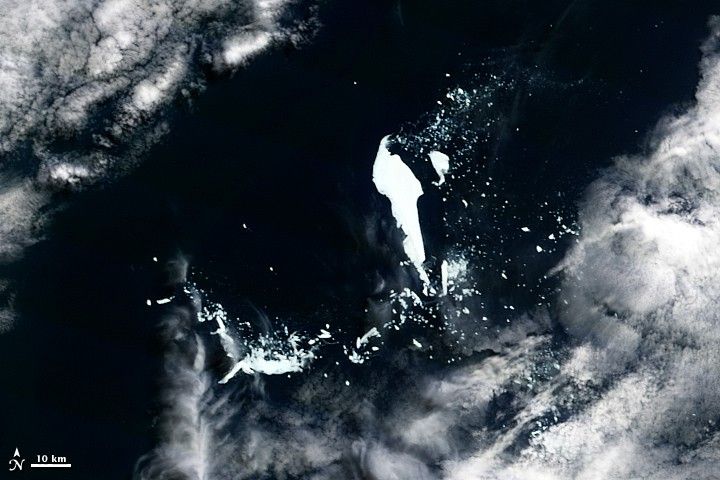
One fragment of B-15, dubbed B-15J, made an appearance in satellite imagery in early December 2011. The iceberg had finally strayed far enough from Antarctica to begin breaking into smaller pieces. The Moderate Resolution Imaging Spectroradiometer (MODIS) on NASA’s Terra satellite captured this natural-color image of B-15J on December 2, 2011.
Sliver-shaped pieces of ice form an arc around the oblong iceberg, which had disintegrated discernibly since last spotted in late November. B-15J and the smaller fragments were roughly 2,400 kilometers (1,500 miles) east-southeast of New Zealand. Floating into warmer waters prompted the breakup. An iceberg from the Larsen Ice Shelf underwent a similar disintegration in 2008.
As of late November 2011, several other remnants of Iceberg B-15 were still drifting in the Southern Ocean, including B-15B, B-15F, B-15G, B-15K, B-15R, B-15T, and B-15X.
References & Resources
- National Ice Center. (2011, November 27). Current Antarctic Iceberg Positions. Accessed December 6, 2011.
- National Ice Center. (2011, November 27). Antarctic Icebergs, Ross Sea East, B15J. Accessed December 6, 2011.
- National Snow and Ice Data Center. (2010, October 20). State of the Cryosphere: Ice Shelves. Accessed December 6, 2011.
NASA Earth Observatory image created by Jesse Allen, using data provided courtesy of the LANCE/EOSDIS Rapid Response team. Caption by Michon Scott with information from Ted Scambos, National Snow and Ice Data Center.