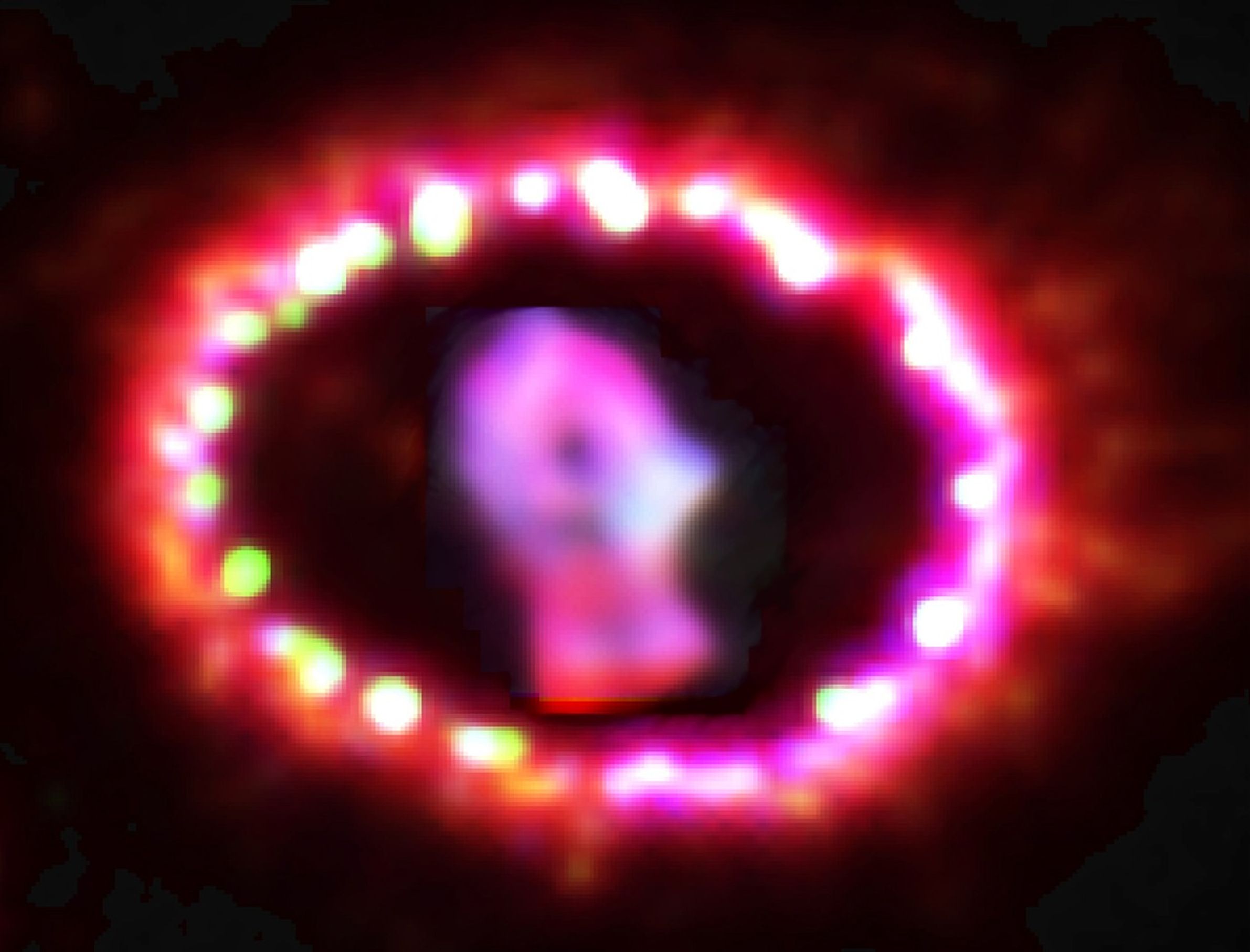
Astronomers using NASA's Hubble Space Telescope are witnessing the unprecedented transition of a supernova to a supernova remnant, where light from an exploding star in a neighboring galaxy, the Large Magellanic Cloud, reached Earth in February 1987. Named Supernova 1987A, it was the closest supernova explosion witnessed in almost 400 years. The supernova's close proximity to Earth has allowed astronomers to study it in detail as it evolves. Now, the supernova debris, which has faded over the years, is brightening. This means that a different power source has begun to light the debris. The debris of SN 1987A is beginning to impact the surrounding ring, creating powerful shock waves that generate X-rays observed with NASA's Chandra X-ray Observatory. Those X-rays are illuminating the supernova debris and shock heating is making it glow in visible light. The results are being reported in today's issue of the journal Nature by a team including Robert Kirshner of the Harvard-Smithsonian Center for Astrophysics (CfA), who leads a long-term study of SN 1987A with Hubble. Since its launch in 1990, the Hubble telescope has provided a continuous record of the changes in SN 1987A.
Voltar às notícias
NASA OFICIAL
New Supernova Remnant Lights Up
New Supernova Remnant Lights Up
24 de julho de 2026
há cerca de 1 hora
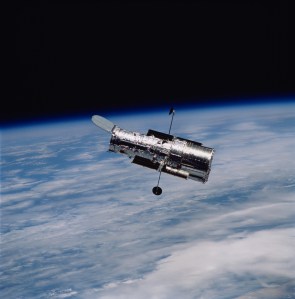
This Hubble Space Telescope image of SN 1987A shows the brightening ring of supernova debris. The closest supernova explosion seen in almost 400 years, it is located in the Large Magellanic Cloud.
NASA
Agência Espacial Americana
NOTÍCIAS RELACIONADAS
há 1 minuto
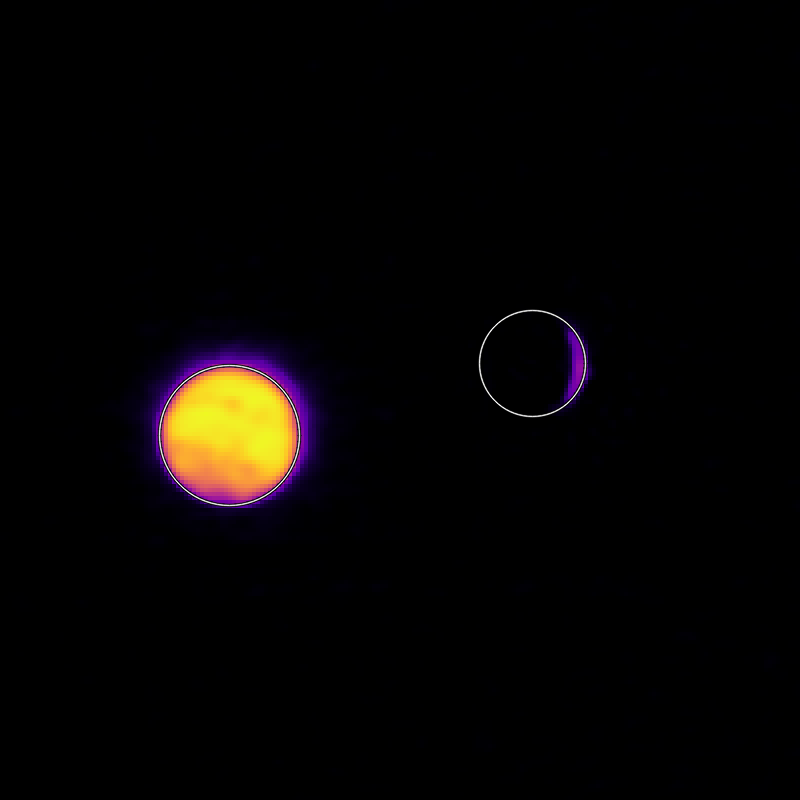
NASA’s ESCAPADE Snaps Family Portrait of Earth, Moon
NASA’s ESCAPADE Snaps Family Portrait of Earth, Moon
Ler mais
há 1 minuto
New Crew Members Welcomed to International Space Station
New Crew Members Welcomed to International Space Station
Ler mais
há 1 minuto
NASA Announces New Spacecraft Technology Demonstration Mission at Moon
NASA Announces New Spacecraft Technology Demonstration Mission at Moon
Ler mais