This article ran in the March 28, 1963 issue of Spaceport News.
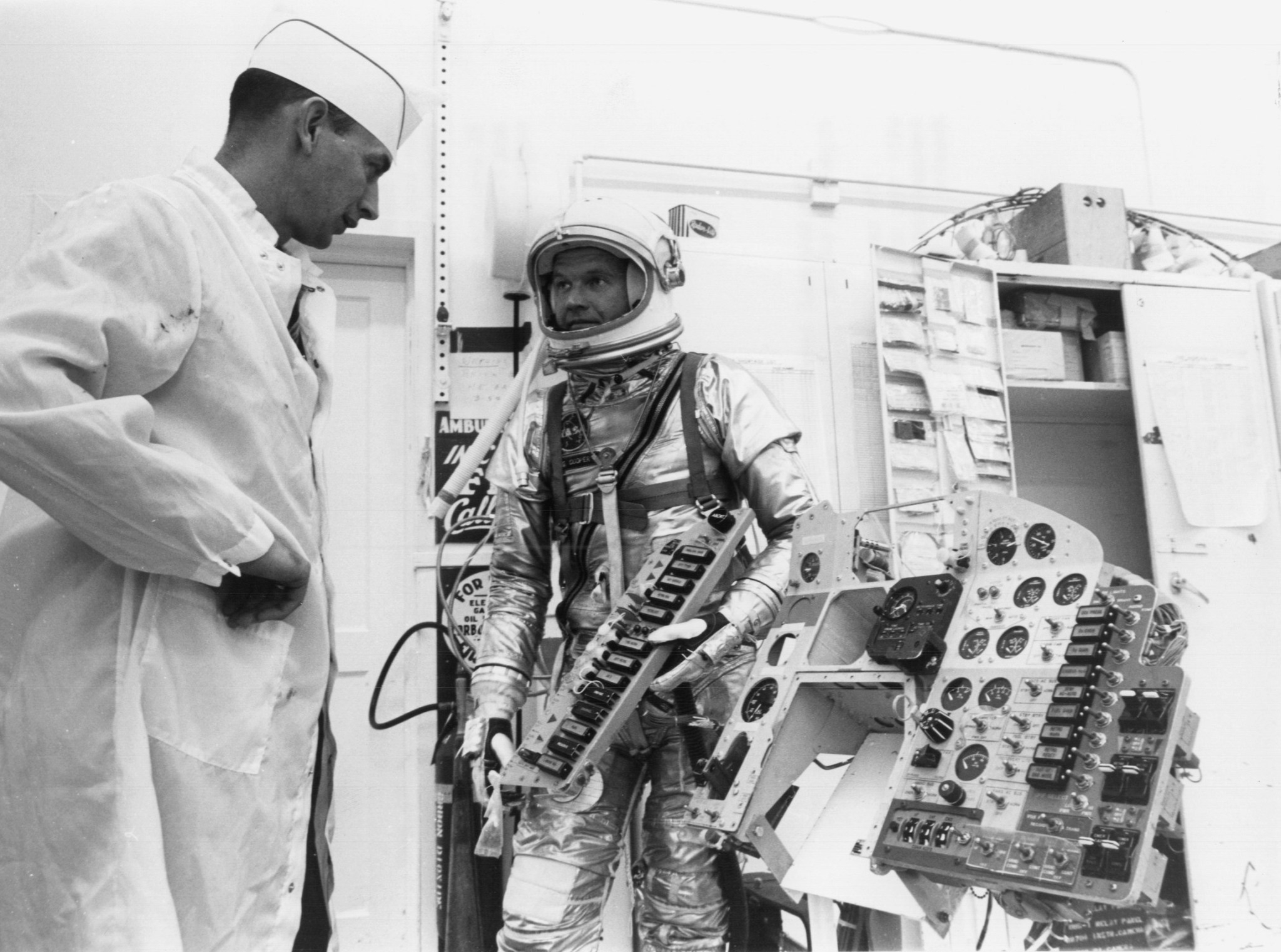
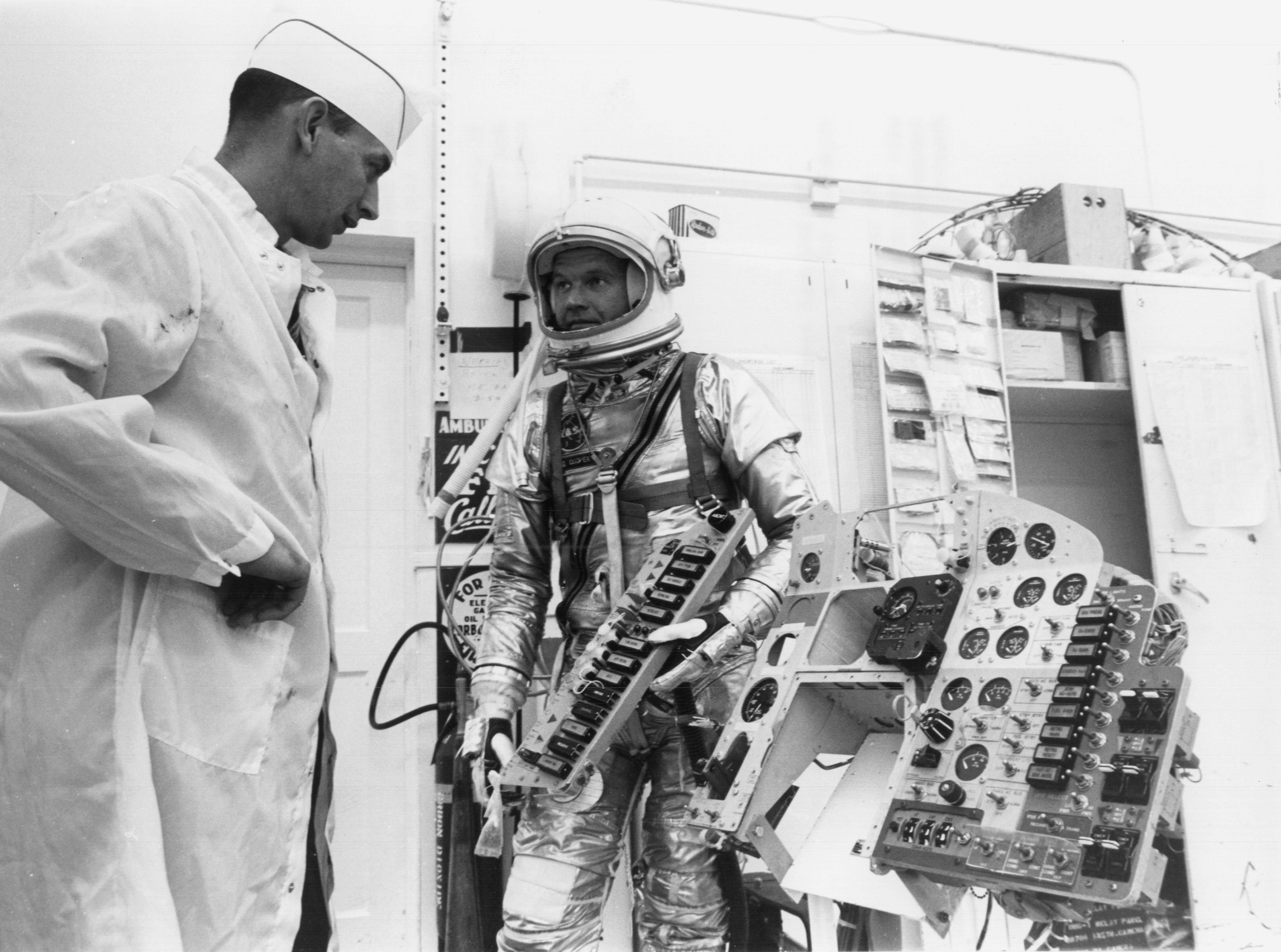
MA-9 Astronaut Gordon Cooper and backup pilot Alan Shepard took turns in their Mercury spacecraft last week for a series of Hangar Simulated Flights.
The tests, held in Hangar S’s White Room and designed to approach actual flight conditions, began Wednesday and ran through Saturday. The simulated flights serve as the final systems tests performed on the spacecraft before it leaves for the launch pad.
Cooper and Shepard were checked through normal liftoff, separation, turn around, orbit mode, retro-firing, reentry, deployment of parachutes and landing bags, and impact.
Abort modes were run as well as normal modes during the testing. Cooper and Shepard each “rode” in the spacecraft several times in stints up to four and a half hours.
The tests serve a four-fold purpose:
- To verify proper operation of all individual systems.
- To insure that all systems operate properly through all predictable mission profiles.
- To demonstrate intrasystem compatibility when all systems are operating concurrently.
- To verify proper operation of the spacecraft systems when configured as near flight conditions as practical.