
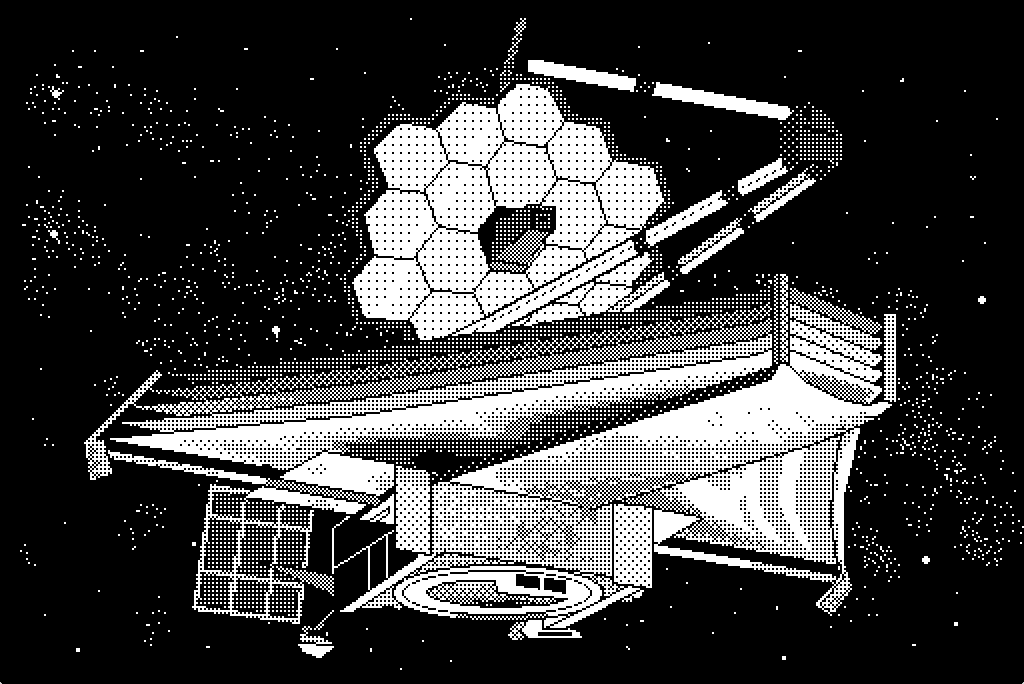
NASA-supported researchers have shown that the James Webb Space Telescope could be used to study the atmospheres of extrasolar planets around nearby white dwarf stars. The team developed a new method that would use the Mid-Infrared Instrument (MIRI) Instrument on Webb and which builds on an established technique known as the IR excess method.
In addition, the new method could also help Webb identify bodies in a star’s habitable zone that include super-Earths, Earth-sized planets, and hot Mercury analogues. The team estimates that Super-Earths in the habitable zone could be detected at a distance of up to 10 parsecs from their host star using 10 hours of observation time. Follow-up characterization of a planet’s atmosphere to search for potential biosignatures could then be undertaken with 20-35 hours of observation time. The researchers believe that observing nearby white dwarf systems with the MIRI instrument using this technique could be the best opportunity to search for signatures of life using Webb.
The paper, “A new method for finding nearby white dwarfs exoplanets and detecting biosignatures,” was published in the Monthly Notices of the Royal Astronomical Society. The research was supported by NASA Astrobiology through the Interdisciplinary Consortia for Astrobiology Research (ICAR) program.