
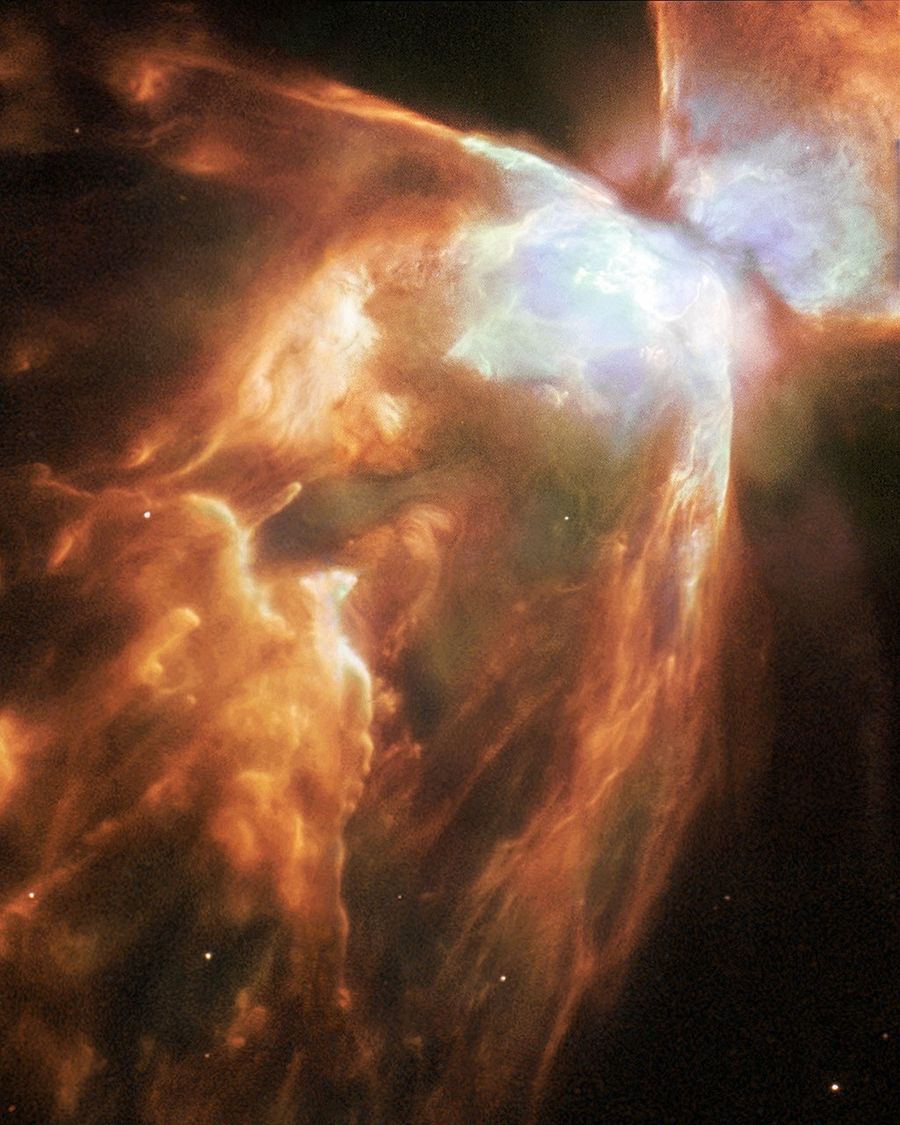
The Bug Nebula, NGC 6302, is one of the brightest and most extreme planetary nebulae known. The fiery, dying star at its center is shrouded by a blanket of icy hailstones. This NASA Hubble Wide Field Camera 2 image shows impressive walls of compressed gas, laced with trailing strands and bubbling outflows. A dark, dusty torus surrounds the inner nebula (seen at the upper right). At the heart of the turmoil is one of the hottest stars known. Despite a sizzling temperature of at least 450,000 degrees Fahrenheit, the star itself has never been seen, as it is hidden by the blanket of dust and shines most brightly in the ultraviolet, making it hard to observe. The Bug Nebula lies about 4,000 light-years away in the southern constellation Scorpius.
Voltar às notícias
FONTE: NASA
Demise in Fire and Ice
The Bug Nebula, NGC 6302, is one of the brightest and most extreme planetary nebulae known. The fiery, dying star at its center is shrouded by a blanket of icy hailstones. This NASA Hubble Wide Field Camera 2 image shows…
03 de maio de 2004
há mais de 22 anos
1 min read de leitura
The Bug Nebula, NGC 6302, is one of the brightest and most extreme planetary nebulae known. The fiery, dying star at its center is shrouded by a blanket of icy hailstones. This NASA Hubble Wide Field Plantery Camera 2 image shows impressive walls of compressed gas, laced with...
NASA
Agência Espacial Americana
NOTÍCIAS RELACIONADAS
há 1 dia
NASA Data Helps Commercial Space Plan Living Off Our Moon
The barren lunar landscape has some important resources, such as water and minerals like iron and titanium, but extracting and processing them will require special equipment. Where those resources can be found will dictate where to land and how to…
Ler mais
há 1 dia
NASA Upgrades Vertical Motion Simulator for Modern Mission Needs
Imagine stepping into a machine that can make you feel like you’re flying a spacecraft, piloting a next generation air taxi, or landing on the Moon, all without leaving the ground. NASA’s Vertical Motion Simulator, the largest of its kind…
Ler mais