On 3/19/24, at the Zeiss Großplanetarium in Berlin, Manil Maskey (IMPACT/ST11) gave a planetarium talk titled “Making NASA’s Science Data Mean More” which was open to the public. This event was a collaborative effort between Stiftung Planetarium Berlin and Technische Universität Berlin, attracting an audience of approximately 300 individuals from diverse backgrounds. Following the talk Maskey participated in an open interactive discussion. The focus of the talk was to visually shed light on the enhanced value that can be derived from NASA’s vast repositories of science data through the application of advanced Artificial Intelligence (AI) techniques. Participants were treated to an immersive experience in the planetarium dome, where some of NASA’s most impressive visualizations were showcased. The event emphasized the importance of satellite imagery and model outputs in understanding our planet and beyond, the innovative AI methodologies being employed to interpret these images, and the wide-ranging implications of these analyses for science and society.
Invited Planetarium Talk on Artificial Intelligence (AI) and NASA Science Data

NASA
Agência Espacial Americana
NOTÍCIAS RELACIONADAS

NASA Modernizes Commercial Airline Systems
NASA’s researchers know that when you settle into your seat on a commercial flight, you expect a smooth takeoff, views over the clouds, a steady descent, and hopefully an early arrival at your destination. But when your flight gets delayed…
Ler mais
NASA Welcomes Croatia as Newest Artemis Accords Signatory
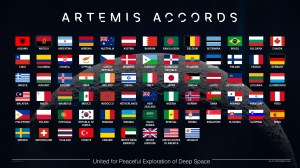
The Republic of Croatia became the 74th signatory to the Artemis Accords on Wednesday during a ceremony in the capital city of Zagreb with NASA and U.S. Department of State officials present. “It is my privilege to welcome the Republic…
Ler mais
NASA Aircraft to Make Low-Altitude Research Flights Over Colorado
Agricultural emissions represent an important and understudied part of Earth’s land and atmosphere systems. The FarmFlux mission will deploy more than a dozen sensors to measure ozone, methane, ammonia, particulates, and other pollutants rising from agricultural lands and animal farms and the interaction with the Earth’s atmosphere.…
Ler mais