
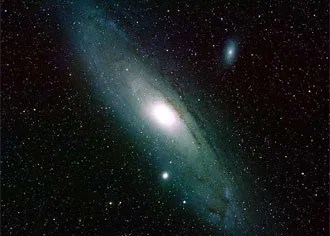
 | Call it a "Tale of Two Galaxies": our Milky Way and neighboring Andromeda (M31). Astronomers have described these galaxies as resembling twins. Both are spiral galaxies with long, coiled arms of gas. They grew up in the same cosmic neighborhood. (Andromeda is 2.5 million light-years from Earth.) They are also about the same size, shape, and age. But astronomers using NASA's Hubble Space Telescope found that Andromeda may have had a much wilder past. The galaxy's rough-and-tumble history may have included |
| crashing into a massive galaxy or devouring several smaller ones. Students from four Huntsville, Ala., area high schools get their chance to prove they have the "right stuff" Saturday, May 3. The evidence is found in the ages of the stars residing on the outskirts or halo of Andromeda. Photographs from Hubble's Advanced Camera for Surveys (ACS) show that about one-third of the stars in the halo formed only 6 to 8 billion years ago. By comparison, the ages of the Milky Way's "halo stars" are 11 to 13 billion years old. | |
Why is there such a difference in the ages? Astronomers think that the collision with another large galaxy or the ravaging of several smaller galaxies scattered the young stars into Andromeda's halo. The newly discovered younger stars in Andromeda's halo are richer in heavier elements than those in our Milky Way's halo, or in most of the small dwarf galaxies that surround the Milky Way. The stars' chemical make-up suggests three possibilities: (1) Collisions destroyed the young disk of Andromeda and dispersed many of its stars into the halo; (2) a single collision destroyed a relatively massive invading galaxy and dispersed its stars and some of Andromeda's disk stars into the halo; and/or (3) many stars formed during the collision itself. Astronomers say it will take more detailed observations to unravel the "forensic evidence" of these early cataclysmic events. | |
The evidence they have unraveled so far required lots of patience. Astronomers assembled 250 exposures of the halo stars to make one image. The observations were taken from Dec. 2 to Jan. 11, 2003, but the total exposure time was 3.5 days. Astronomers needed the lengthy observations because the halo's ordinary Sun-like stars are too faint to be seen with most observatories. In fact, before using the ACS to tackle the halo stars, astronomers had observed only the brightest ones. The sharp eyes of the ACS, however, uncovered about 300,000 stars that astronomers had never seen before. | |
Voltar às notícias
FONTE: NASA
NASA – ‘A Tale of Two Galaxies’: Andromeda and Our Milky Way
Call it a “Tale of Two Galaxies”: our Milky Way and neighboring Andromeda (M31). Astronomers have described these galaxies as resembling twins. Both are spiral galaxies with long, coiled arms of gas. They grew up in the same cosmic neighborhood.…
07 de maio de 2003
há mais de 23 anos
2 min read de leitura
NASA
Agência Espacial Americana
NOTÍCIAS RELACIONADAS
há cerca de 11 horas
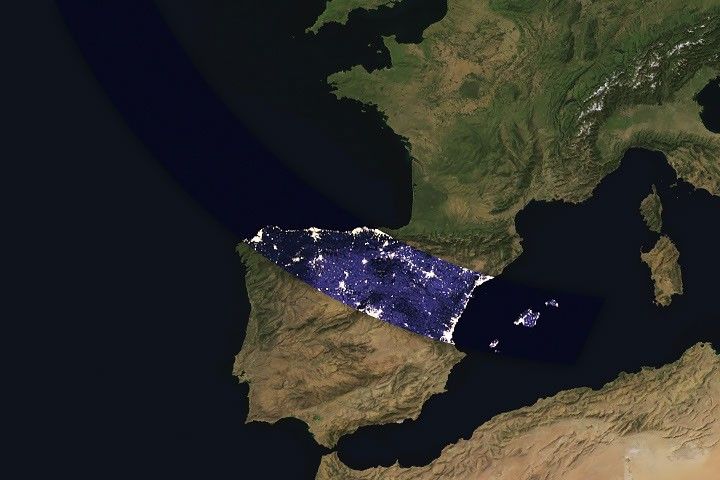
Stops Along the Path of Totality
Western Iceland and northern Spain are among the few Northern Hemisphere locations experiencing a total solar eclipse on August 12, 2026.
Ler mais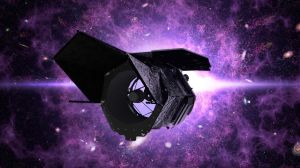
há 1 dia
What Is the Nancy Grace Roman Space Telescope? (Grades 5-8)
This article is for students grades 5-8. The Nancy Grace Roman Space Telescope is NASA’s newest astrophysics observatory. The telescope will scan large sections of space. Roman will help astronomers answer questions about dark energy, dark matter, exoplanets, and more. ______________________________________________________________________…
Ler mais
há 1 dia
NASA Completes Astronaut-Deployed Science Instrument for Lunar Surface
NASA has declared “wrenches down” on the first completed payload designed for Artemis astronauts to deploy on the Moon’s surface. Engineers working on NASA’s Lunar Environment Monitoring Station, or LEMS, have completed hardware development and testing and the payload is…
Ler mais