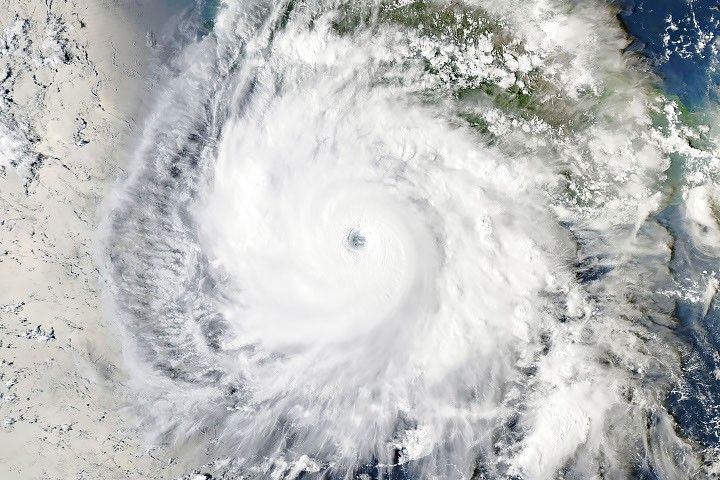
Earth’s oceans and atmosphere are changing as the planet warms. Some ocean waters become greener as more microscopic organisms bloom. In the atmosphere, dust storms born on one continent affect the air quality of another, while smoke from massive wildfires can blanket entire regions for days.
NASA’s newest Earth-observing satellite, called PACE (Plankton, Aerosol, Cloud, ocean Ecosystem), is launching in February 2024 to help us better understand the complex systems driving these and other global changes that come with a warming climate.
“The ocean and atmosphere interact in ways that need ongoing research to fully understand,” said Jeremy Werdell, project scientist for the PACE mission at NASA’s Goddard Space Flight Center in Greenbelt, Maryland.“With PACE, we’ll open our eyes to many new aspects of climate change.”
The ocean is changing color
Climate change’s impact on the ocean are numerous, from sea level rise to marine heat waves to a loss of biodiversity. With PACE, researchers will be able to study its effect on marine life in its smallest form.
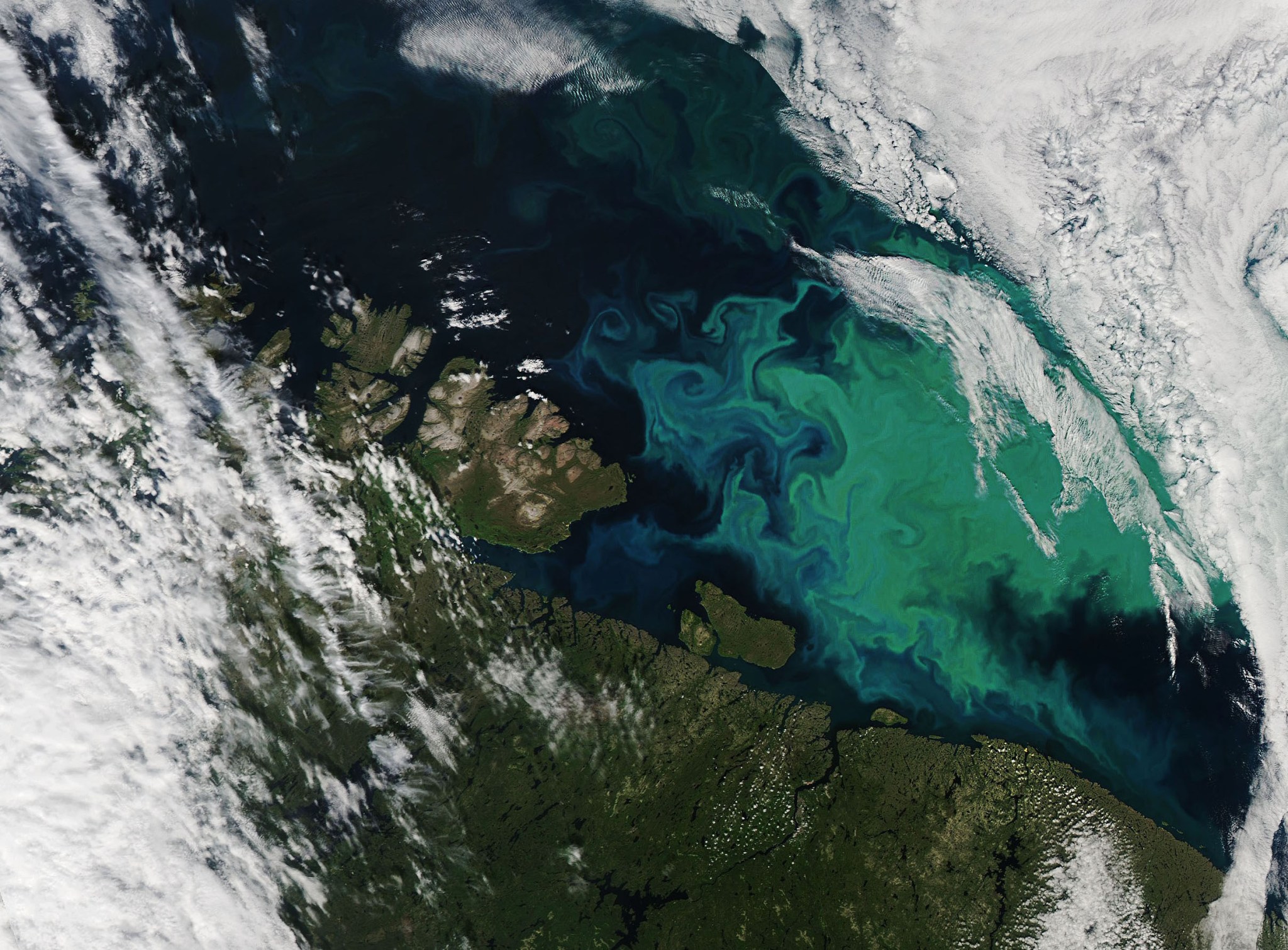
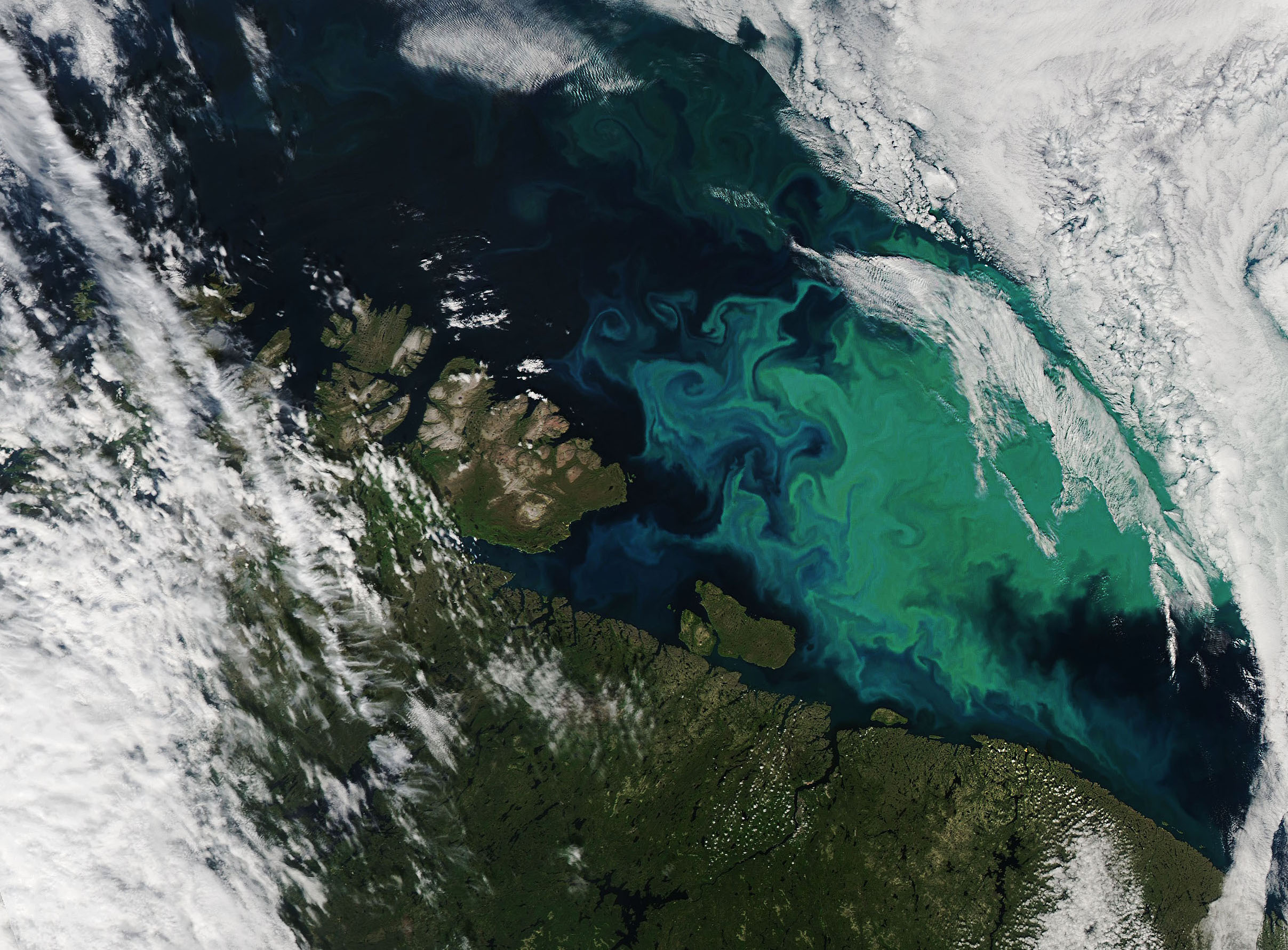
Phytoplankton are microscopic, plant-like organisms that float near the water’s surface and form the center of the aquatic food web, providing food to all sorts of animals ranging from shellfish to finfish to whales. There are thousands of species of phytoplankton, each with different niches in the ocean.
Credit: NASA Earth Observatory
While a single phytoplankton typically can’t be seen with the naked eye, communities of trillions of phytoplankton, called blooms, can be seen from space. Blooms often take on a greenish tinge due to the chlorophyll molecules that phytoplankton, like land-based plants, use to make energy through photosynthesis.
According to Ivona Cetinić, an oceanographer in the Ocean Ecology Lab at NASA Goddard, phytoplankton are responding to changes in their environment. Differences in ocean temperatures, nutrients, or sunlight availability can cause a species to boom or bust.
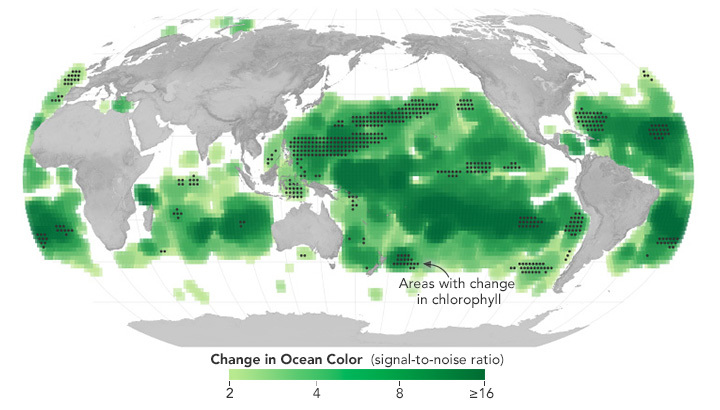
From space, those changes in phytoplankton populations manifest as differences in hue, allowing scientists to study phytoplankton abundance and diversity from afar, and at a global scale. And scientists recently found that the ocean is turning a touch greener.
In a study published in 2023, researchers used chlorophyll concentration data collected for more than 20 years by the Moderate Resolution Imaging Spectroradiometer (MODIS) on NASA’s Aqua satellite to determine not only when and where phytoplankton blooms occurred, but also how healthy and abundant they were.
Credit: NASA Earth Observatory
PACE’s Ocean Color Instrument (OCI), a hyperspectral sensor, will take marine science a leap further by allowing researchers to remotely differentiate phytoplankton by type. (Historically, species could only be determined by direct sampling of the water.) Each community has its own color signature that an instrument like OCI can identify.
Identification of phytoplankton types is key because different phytoplankton play vastly different roles in aquatic ecosystems. They have beneficial roles, like fueling the food chain or drawing down carbon dioxide from the atmosphere for photosynthesis. Some phytoplankton populations sequester carbon as they die and sink to the deep ocean; others release the gas back into the atmosphere as they decay near the surface.
But some, like those in harmful algae blooms, can negatively impact humans and aquatic ecosystems. And the presence of harmful algae can also tell us something about the quality of the water sources, such as the presence of too many nutrients from human activities. By identifying these communities in the ocean, scientists can tease out information about how and where phytoplankton are affected by climate change, and how changes in these tiny organisms may affect other creatures and ocean ecosystems.
Particles in the air feed phytoplankton at sea
Beyond their role as the grass of the sea, phytoplankton also play a role in a complex dance between atmosphere and ocean. And PACE will see both partners in this dance.
From space, with a view of the whole planet every two days, PACE will track both microscopic organisms in the ocean and microscopic particles in the atmosphere called aerosols. How these two interact will provide scientists with additional insights into the impact of a changing climate.