
LaunchToCosmos
Voltar às notícias
NASA OFICIAL

Risk of Altered Sensorimotor/Vestibular Function Impacting Critical Mission Tasks, Human Health, and Long-Term Health (Sensorimotor Risk)

Risk of Altered Sensorimotor/Vestibular Function Impacting Critical Mission Tasks, Human Health, and Long-Term Health (Sensorimotor Risk)

01 de agosto de 2026
há cerca de 1 hora
Risk of Altered Sensorimotor/Vestibular Function Impacting Critical Mission Tasks, Human Health, and Long-Term Health (Sensorimotor Risk)
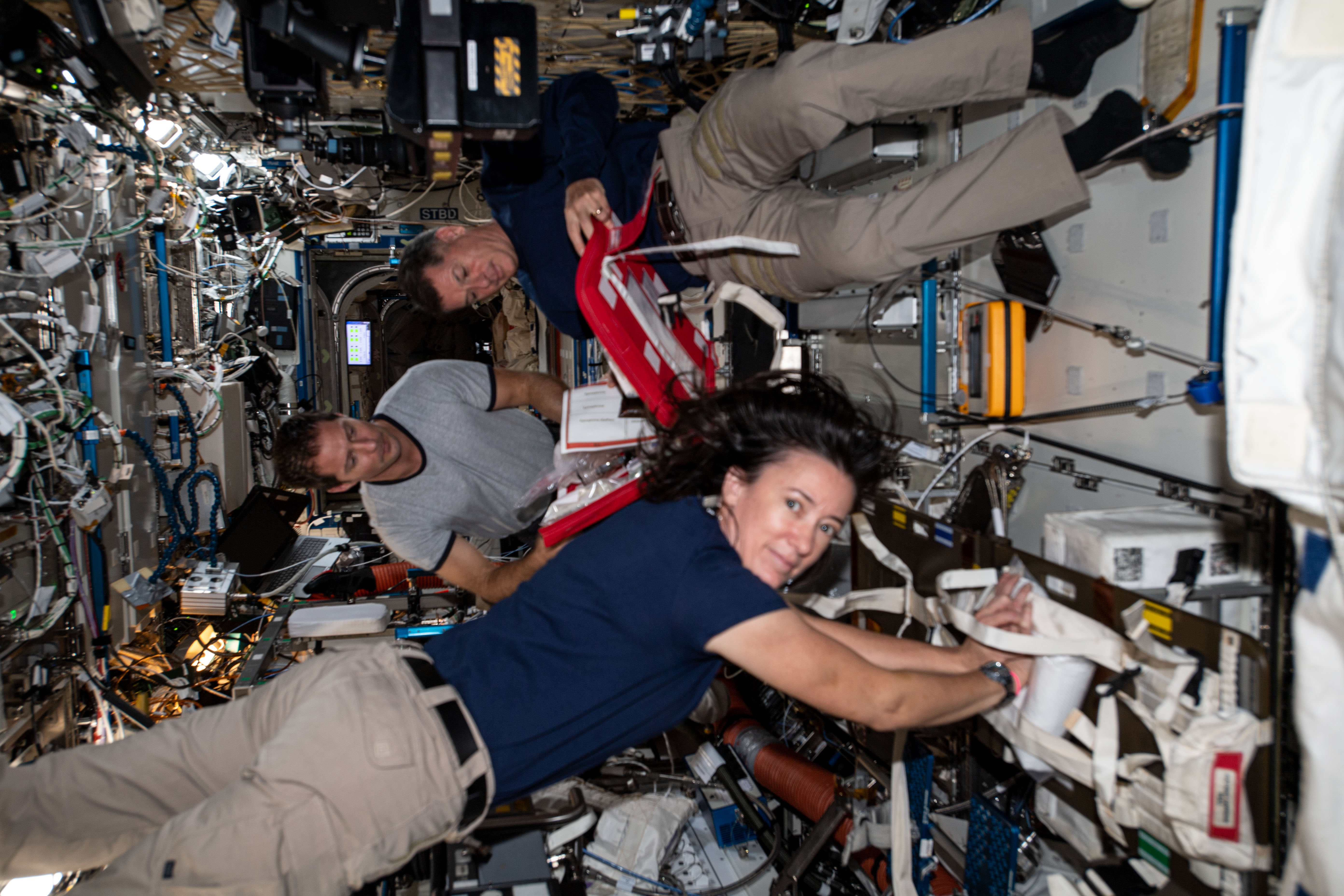
astronauts train for a medical emergency aboard the ISS
Expedition 65 Flight Engineers (clockwise from left) Thomas Pesquet, Shane Kimbrough and Megan McArthur train for a medical emergency aboard the International Space Station. Pesquet and Kimbrough review medical hardware while McArthur practices chest compressions, or cardiopulmonary resuscitation (CPR), in the weightless environment of the orbiting lab.
NASA

Exposure to altered gravity leads to changes in sensorimotor/vestibular function that manifest in motion sickness, spatial disorientation, decrements in postural control and locomotion, and manual and fine motor control deficits.  It takes hours to days for the body to readapt to gravity upon landing, with associated balance issues and visual inconsistencies. The risk of impairment is greatest during and soon after G-transitions when performance decrements may have high operational impact [manual landings, immediate egress following landing, early extravehicular activities (EVAs)].

Directed Acyclic Graph Files

+ DAG File Information (HSRB Home Page)

+ Sensorimotor Risk DAG and Narrative (PDF)

+ Sensorimotor Risk DAG Code (TXT)

Human Research Roadmap

+ Risk of Altered Sensorimotor/Vestibular Function Impacting Critical Mission Tasks
+ 2026 June Evidence Report (MSWord)

NASA

Agência Espacial Americana

Fonte original