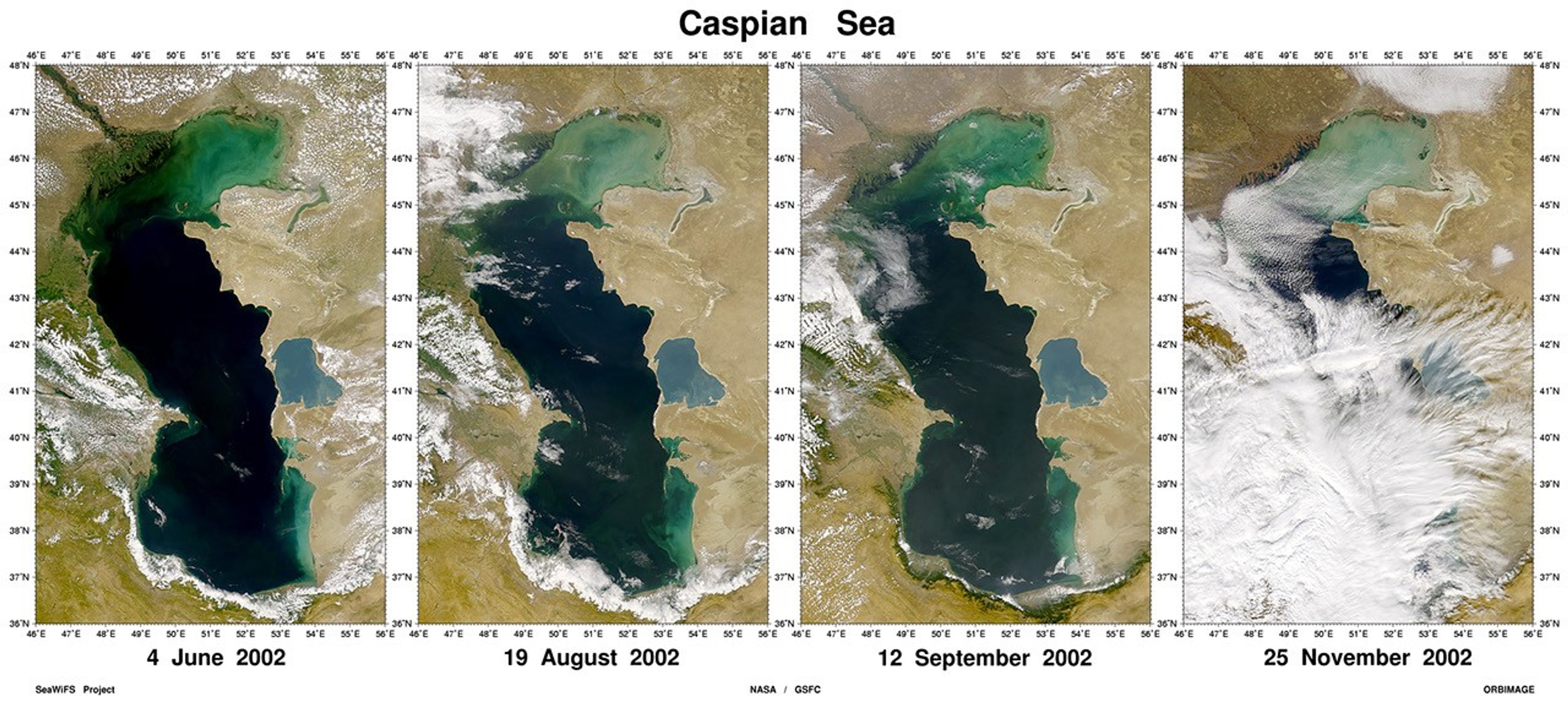

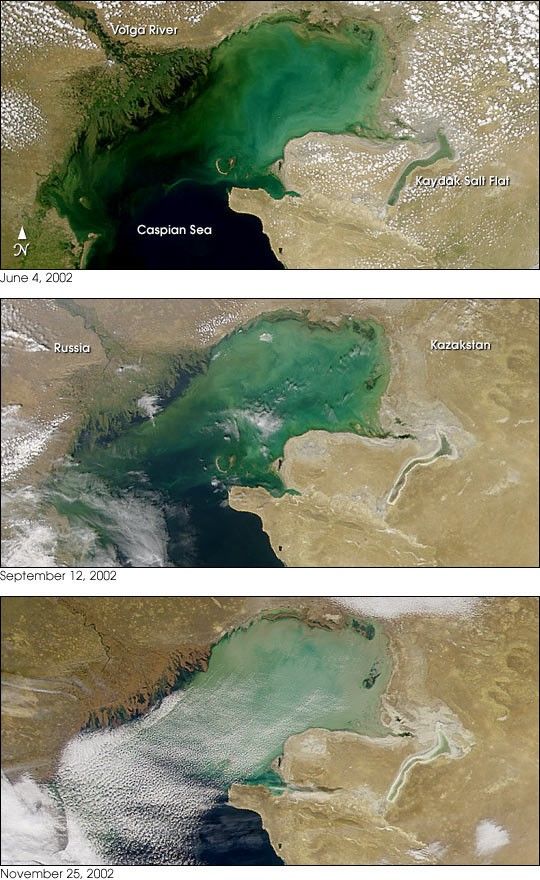
Variations in rainfall change the appearance of the Caspian Sea as theseasons change. This image sequence from the Sea-viewing Wide Field-of-view Sensor(SeaWiFS) shows sediment brightening the water of the Caspian’s northern section.The Volga River, which enters from the upper lefthand side of this image, is thelargest source of fresh water to the sea. To the right the Kaydak Salt Flat driesout from June to November.
The Caspian is home to the sturgeon, a fish which supplies the worldwith caviar. This region also has extensive oil reserves. which are just nowbeing fully explored.
References & Resources
Image courtesy the SeaWiFS Project, NASA/Goddard Space Flight Center, and ORBIMAGE