
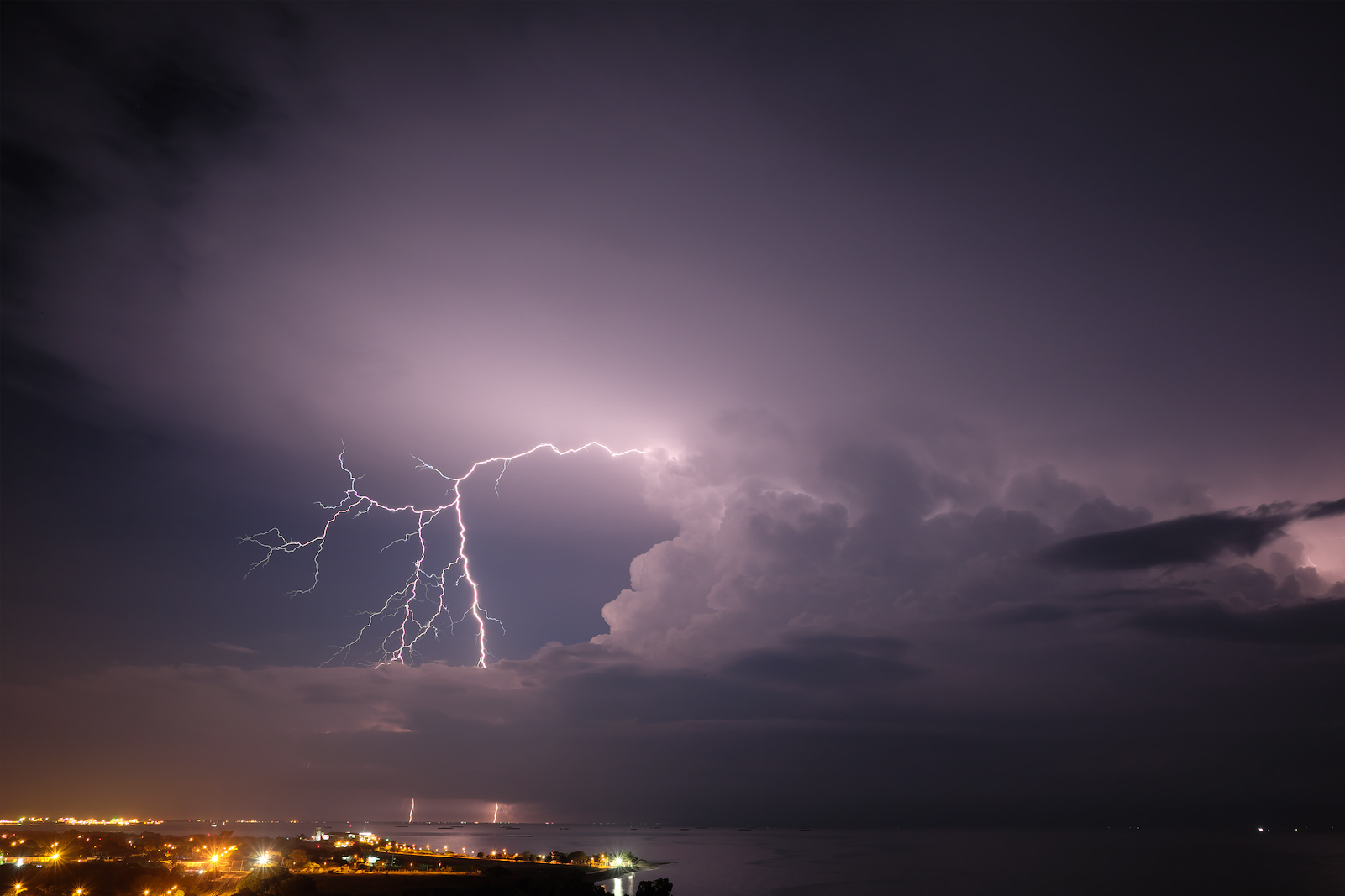
There’s more to thunderclouds than rain and lightning. Along with visible light emissions, thunderclouds can produce intense bursts of gamma rays, the most energetic form of light, that last for millionths of a second. The clouds can also glow steadily with gamma rays for seconds to minutes at a time.
Researchers using NASA airborne platforms have now found a new kind of gamma-ray emission that’s shorter in duration than the steady glows and longer than the microsecond bursts. They’re calling it a flickering gamma-ray flash. The discovery fills in a missing link in scientists’ understanding of thundercloud radiation and provides new insights into the mechanisms that produce lightning. The insights, in turn, could lead to more accurate lightning risk estimates for people, aircraft, and spacecraft.
Researchers from the University of Bergen in Norway led the study in collaboration with scientists from NASA’s Marshall Space Flight Center in Huntsville, Alabama, and NASA's Goddard Space Flight Center in Greenbelt, Maryland, the U.S. Naval Research Laboratory, and multiple universities in the U.S., Mexico, Colombia, and Europe. The findings were described in a pair of papers in Nature, published Oct. 2.
The international research team made their discovery while flying a battery of detectors aboard a NASA ER-2 research aircraft. In July 2023, the ER-2 set out on a series of 10 flights from MacDill Air Force Base in Tampa, Florida. The plane flew figure-eight flight patterns a few miles above tropical thunderclouds in the Caribbean and Central America, providing unprecedented views of cloud activity.
The scientific payload was developed for the Airborne Lightning Observatory for Fly’s Eye Geostationary Lightning Mapper Simulator and Terrestrial Gamma-ray Flashes (ALOFT) campaign. Instrumentation in the payload included weather radars along with multiple sensors for measuring gamma rays, lightning flashes, and microwave emissions from clouds.