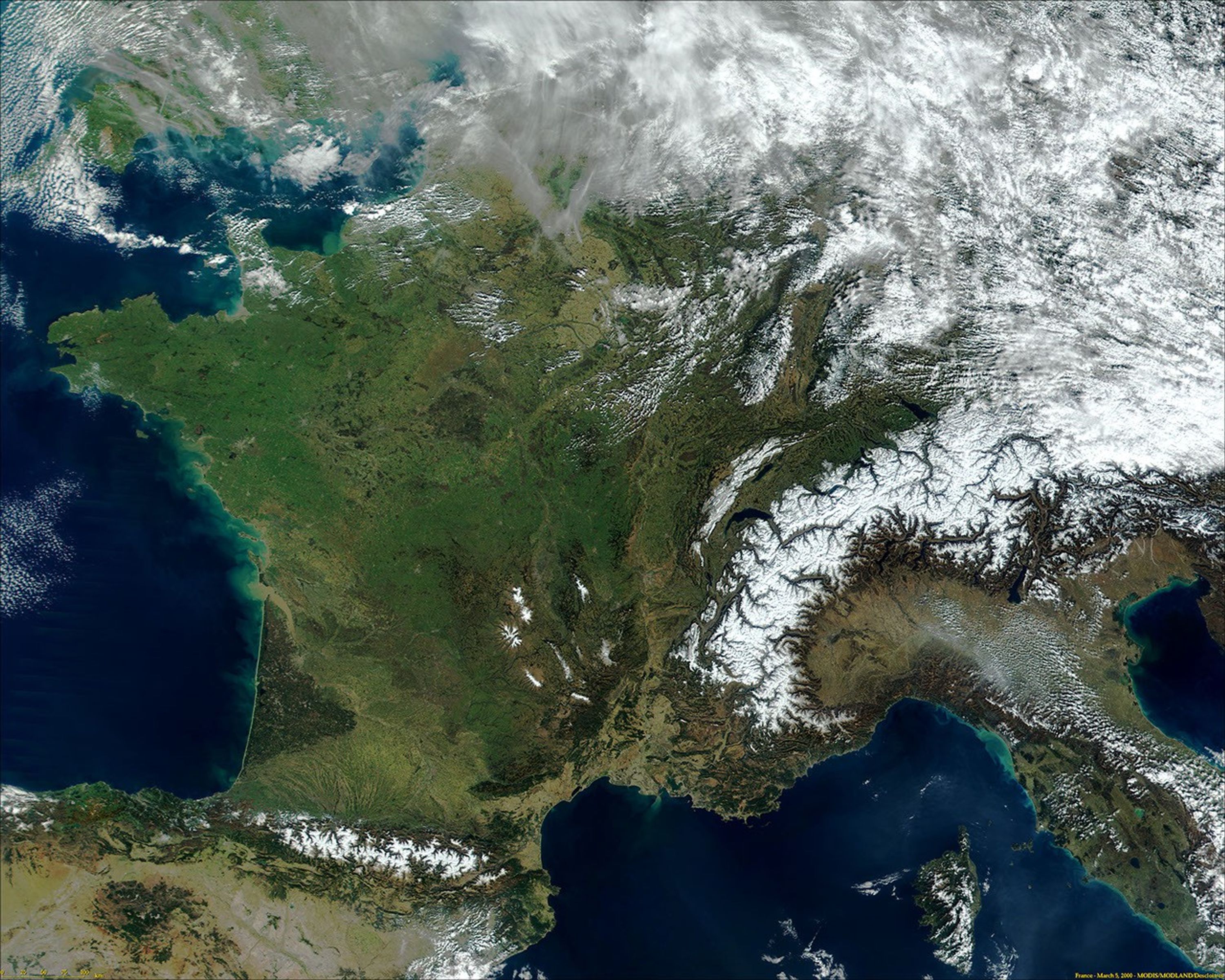
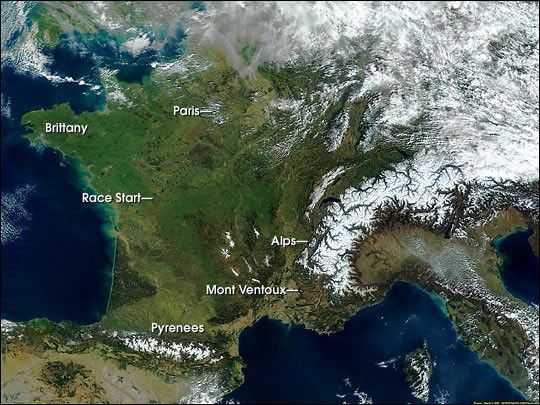
Every July, the world’s best cyclists racemore than 3500 km around France, and sometimes thesurrounding countries, in the Tour de France. Thisimage from the Moderate resolution ImagingSpectroradiometer (MODIS) shows the varied terrainwhich challenges the riders. The race started in western France atFuturoscope, and headed toward Brittany. In these mostly flat#147;stages” (as each day’s raceis called) sprinting specialists usually dashfor the finish out of the main pack of riders. The race then moved to the Pyreneesmountains, in southern France along the border with Spain.Climbers and the overall favorites shine in the mountains,often gaining 10 minutes or more on their rivals. Only a fewdays after the Pyrenees climbs the race was again in themountains. First Mont Ventoux, an extinct volcano in Provence,and then the massive Alps, with altitudes as high as2,645 meters, challenged the racers. Finally the race headedtoward Paris and a July 23rd finish in Paris.
Go Lance!
To learn more about MODIS, visit the MODIS web.
References & Resources
Image by Jacques Descloitres, MODIS Land group, NASA GSFC