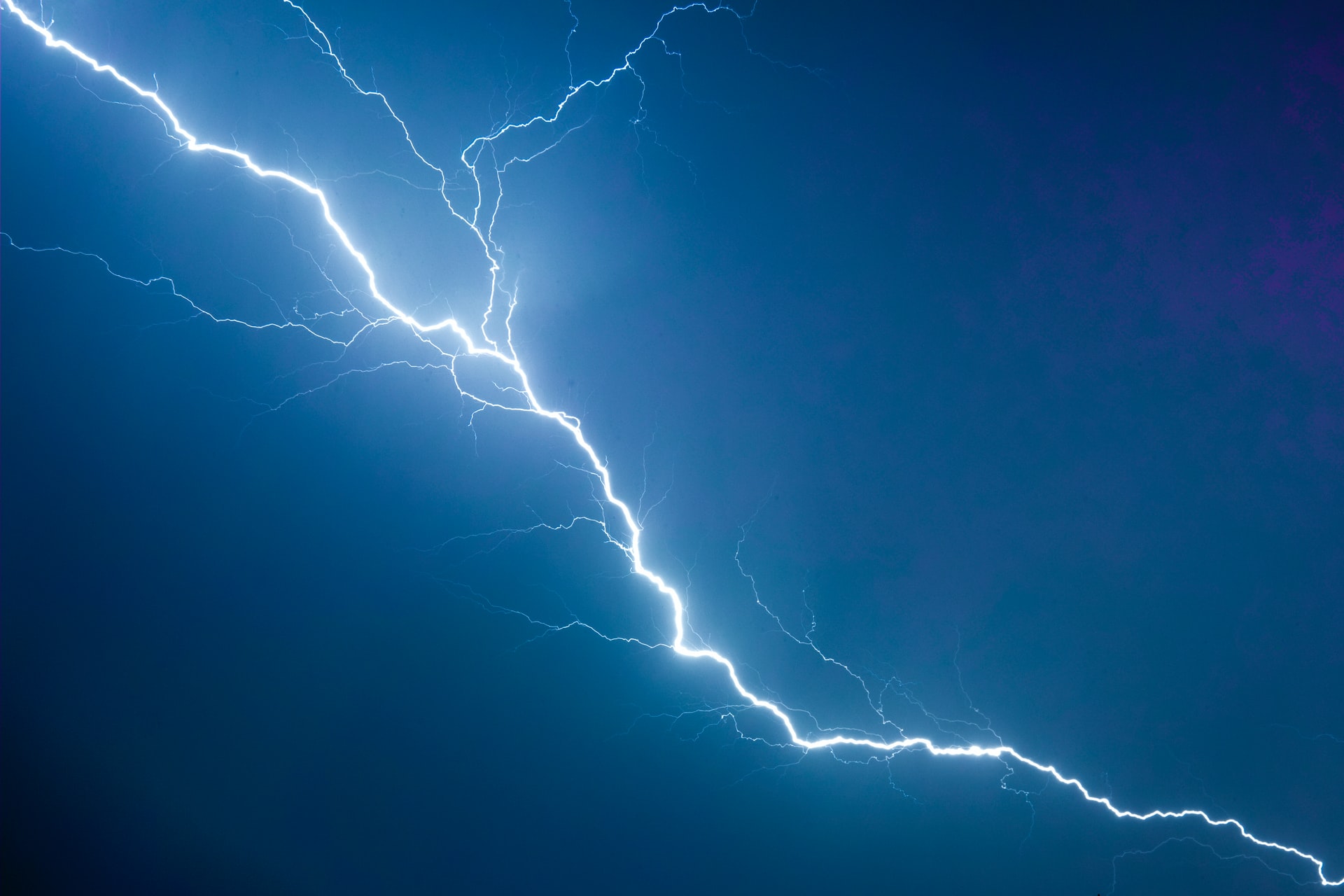
Christopher Schultz (ST11) led a team consisting of Phillip Bitzer (UAH), Michael Antia (Jacobs), Jonathan Case (Ensco), and Christopher Hain (MSFC) to examine 26-years of lightning-initiated wildfires (LIW) to understand the types of lightning that were producing wildfire events within the United States. Twenty-six years of lightning data were paired with over 68,000 LIW reports to understand lightning flash characteristics responsible for ignition in between 1995 and 2020. Results indicate that 92% of LIW were started by negative cloud-to-ground (CG) lightning flashes and 57% were single stroke flashes. Moreover, 62% of LIW reports did not have a positive CG within 10 km of the start location, contrary to the science literature’s suggestion that positive CG flashes are a dominant fire-starting mechanism. Nearly 1/3rd of wildfire events were holdovers, meaning one or more days elapsed between lightning occurrence and fire report. However, fires that were reported less than a day after lightning occurrence statistically burned more acreage. Peak current was not found to be a statistically significant delineator between fire starters and non-fire starters for -CGs but was for positive CGs. Results highlighted the need for reassessing the role of positive CG lightning and subsequently long continuing current in wildfire ignition started by lightning. One outcome of this study’s results is the development of real-time tools to identify ignition potential during lightning events to aid in fire mitigation efforts. Furthermore, the findings of this study should lead to new science in defining the continuing current duration needed to ignite a fire as a function of the underlying land surface.