Notícias NASA
Acompanhe as últimas descobertas, missões e avanços científicos da NASA. Explore o universo através das notícias mais recentes da agência espacial americana.
ÚLTIMAS NOTÍCIAS
Explore milhares de notícias da NASA • Carregamento dinâmico
Mostrando 20 notícias da página 201 de 4046

Risk of Altered Sensorimotor/Vestibular Function Impacting Critical Mission Tasks, Human Health, and Long-Term Health (Sensorimotor Risk)
Exposure to altered gravity leads to changes in sensorimotor/vestibular function that manifest in motion sickness, spatial disorientation, decrements in postural control and locomotion, and manual and fine motor control deficits. It takes hours to days for the body to readapt…

Risk of Hearing Loss and Performance Decrements Due to Acoustics Issues in Space
Noise exposure in spaceflight can negatively impact hearing, but it can also cause other physiological effects (e.g., irritation, headaches, and degradation in sleep and relaxation). Noise can also affect performance of specific activities (e.g., working and speech communications) and impact…

Risk of Cardiovascular Adaptations Contributing to Adverse Mission Performance and Health Outcomes (CV Risk)
Exposure to the spaceflight environment can contribute to cardiovascular deconditioning, dysfunction, and remodeling. There is a possibility that crews will experience impaired performance and negative cardiovascular health outcomes during and after spaceflight and planetary operations. Manifestation of the cardiovascular risk…

Risk of Bone Fracture due to Spaceflight-induced Changes to Bone
Exposure to altered gravity causes skeletal changes, which can result in compromised bone strength during and after spaceflight, increasing the risk of fracture. Bone fracture in-mission depends on expected loads and degree of skeletal fragility. Countermeasures such as exercise, adequate…

Risk of Adverse Mission Outcomes Due to Earth Independent Human-Systems Operations (EIHSO Risk)
The EIHSO risk can impact all phases of mission operation where the crew-members are expected to interact with the vehicle in both nominal and off-nominal operation. Most importantly, as the distance from Earth increases, crew will need to be more…

Risk of Adverse In-Mission Health and Performance Effects and Long-Term Health Effects Due to Celestial Dust Exposure (Dust Risk)
Lunar dust exposure has not been a hazard since the 1972 Apollo missions. Data collected at that time has provided insight and many years of research. Due to the unique properties of lunar dust (and other celestial bodies), there is…

Risk of Adverse Health Outcomes and Performance Decrements resulting from Non-Ionizing Radiation (NIR) during Spaceflight (Non-Ionizing Radiation Risk)
Sunlight exposure primarily affects the eye and skin and is mitigated by current standards and countermeasures. An increase in the prevalence of high-power ground-based lasers capable of reaching the ISS, and possibly even the Moon, could cause acute laser exposure…

Risk of Adverse Health Outcomes and Decrements in Performance due to Inflight Medical Conditions
Regardless of mission length or objectives, all human spaceflight requires some degree of in-mission medical support. The transition from a gravitational environment to microgravity, coupled with living in a closed-loop environment, can result in variable physiological effects and health risks.…

Risk of Adverse Health Effects Due to Host-Microorganism Interactions
Exposure to the spaceflight environment evidence indicates alterations in microbial virulence and astronaut immune function. While preventive measures limit the presence of many medically significant microorganisms during spaceflight missions, microbial infection of astronauts cannot be completely prevented and does occur,…

Risk of Adverse Cognitive or Behavioral Changes and Psychiatric Disorders Leading to In-mission Health and Performance and Long-term Health Effects (Behavioral Health Risk)
Exposure to the isolation and confinement of spaceflight can result in decrements in cognitive and behavioral functioning. While cognitive or behavioral conditions may not immediately or directly threaten total mission success, such conditions adversely impact individual and crew health, well-being,…

Risk of Nominal Acute and Chronic Ambient Carbon Dioxide Exposure in Crewed Vehicles Leading to In-Mission Health Effects or Performance Decrements (CO2 Risk)
Hostile, enclosed spaceflight environments (including space vehicles and suits) do not have the benefit of natural carbon dioxide (CO2) removal. In these environments, equipment (e.g., the Carbon Dioxide Removal Assembly, lithium hydroxide, and amine systems) control CO2 levels and mitigate…

Concern of Venous Thromboembolism
Note: The Concern of Venous Thromboembolism is historical and now a component of CV Risk. Stagnant or reverse flow in the internal jugular vein has been observed in 6 of 11 crew members (55%) tested in-mission on approximately flight day…
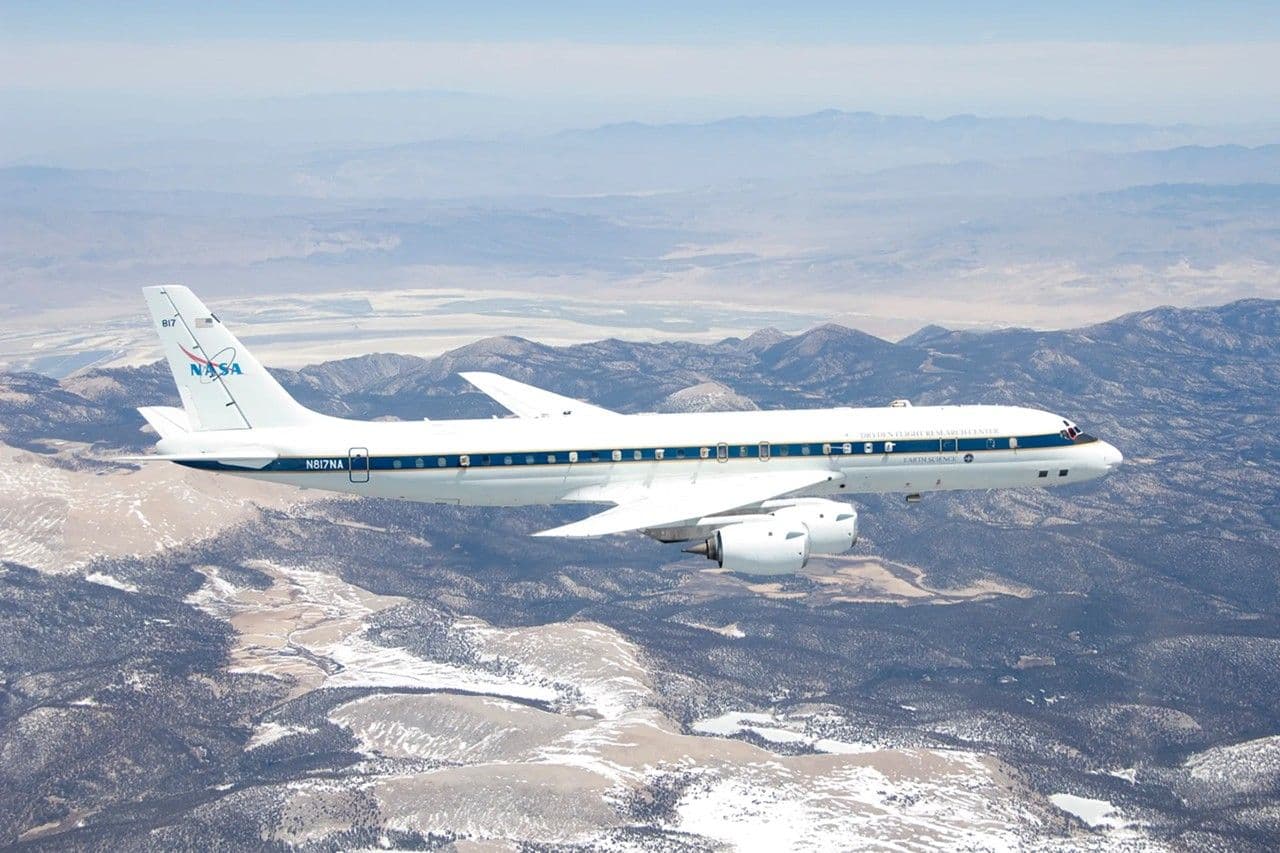
The NASA DC-8 Retires: Reflections on its Contributions to Earth System Science
Introduction Since 1987, a highly modified McDonnell Douglas DC-8 aircraft has been a workhorse in NASA’s Airborne Science Program (ASP) – see Photo 1. The aircraft, located at NASA’s Armstrong Flight Research Center (AFRC) in California, flew countless missions as a…
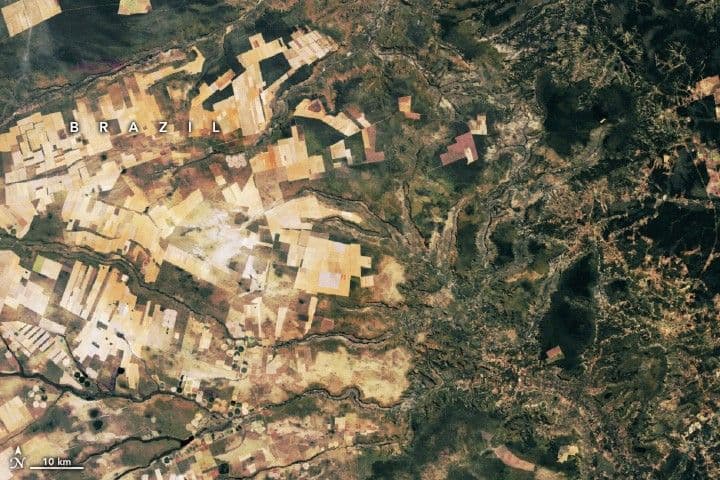
Spotting Disruptions to Earth’s Vegetation
Using NASA data, researchers can track vegetation changes around the planet, not just in forests but also in grasslands and savannas like the Brazilian Cerrado.
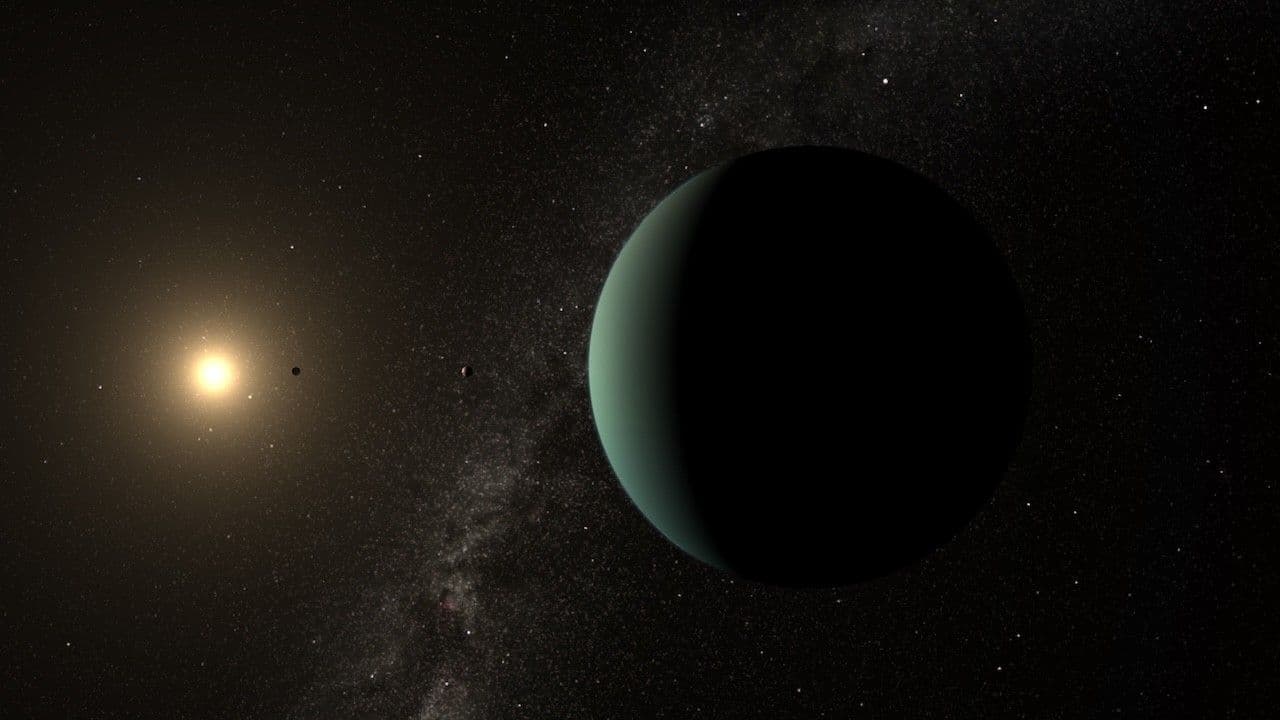
Discovery Alert: ‘Super-Earth’ Swings from Super-Heated to Super-Chill
The Discovery A possible “super-Earth” orbits a relatively close, Sun-like star, and could be a habitable world – but one of extreme temperature swings, from scorching heat to deep freeze. Key Facts The newly confirmed planet is the outermost of…

How Do We Know the Earth Isn’t Flat? We Asked a NASA Expert: Episode 53
This was a magical revelation for the Greeks and the Egyptians, who were able to see from the motions of the stars and the way the Sun moved. They saw the way the Sun’s shadow worked in different places. And…

NASA’s Chevron Technology Quiets the Skies
Shortly after dawn on March 27, 2001, NASA pilot Bill Rieke took off from an airfield just outside of Phoenix in NASA’s blue-and-white Learjet 25 and flew low over a series of microphones for the first flight test of a…

NASA Names New EVA and Human Surface Mobility Program Deputy Manager
NASA has selected Jim Geffre as deputy manager for the Extravehicular Activity and Human Surface Mobility Program. Geffre, a veteran leader with over 24 years of experience in human spaceflight, brings an extensive background in spacecraft development, integration, and operations.…

Team Preps to Study Dark Energy via Exploding Stars With NASA’s Roman
The universe is ballooning outward at an ever-faster clip under the power of an unknown force dubbed dark energy. One of the major goals for NASA’s upcoming Nancy Grace Roman Space Telescope is to help astronomers gather clues to the…

NASA Selects Three University Teams to Participate in Flight Research
NASA has selected three university teams to help solve 21st century aviation challenges that could transform the skies above our communities. As part of NASA’s University Leadership Initiative (ULI), both graduate and undergraduate students on faculty-led university teams will contribute…
SOBRE AS NOTÍCIAS NASA
Fonte Oficial
Todas as notícias são obtidas diretamente do site oficial da NASA, garantindo informações precisas e atualizadas.
Atualização Automática
O conteúdo é atualizado automaticamente a cada 5 minutos, trazendo sempre as notícias mais recentes.
Conteúdo Científico
Descobertas, missões espaciais, pesquisas e avanços tecnológicos da agência espacial americana.